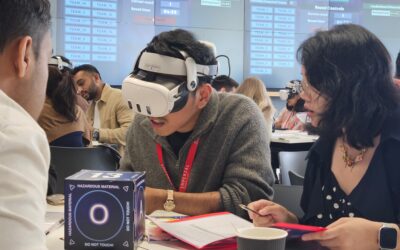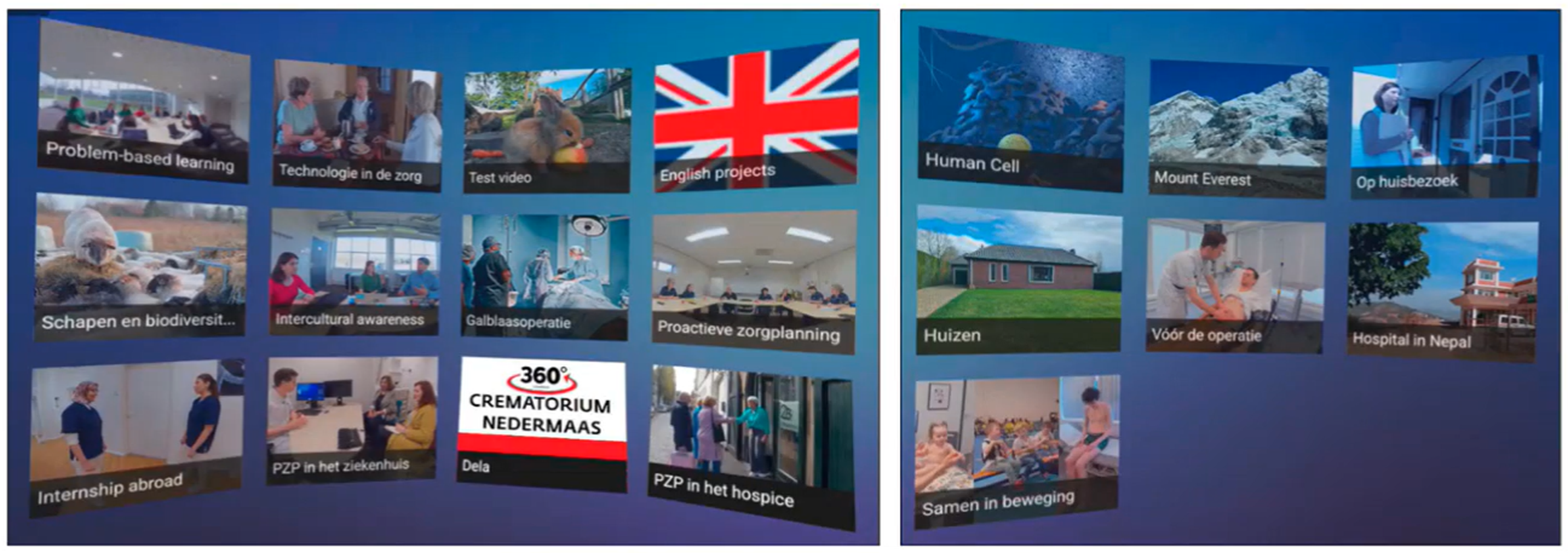
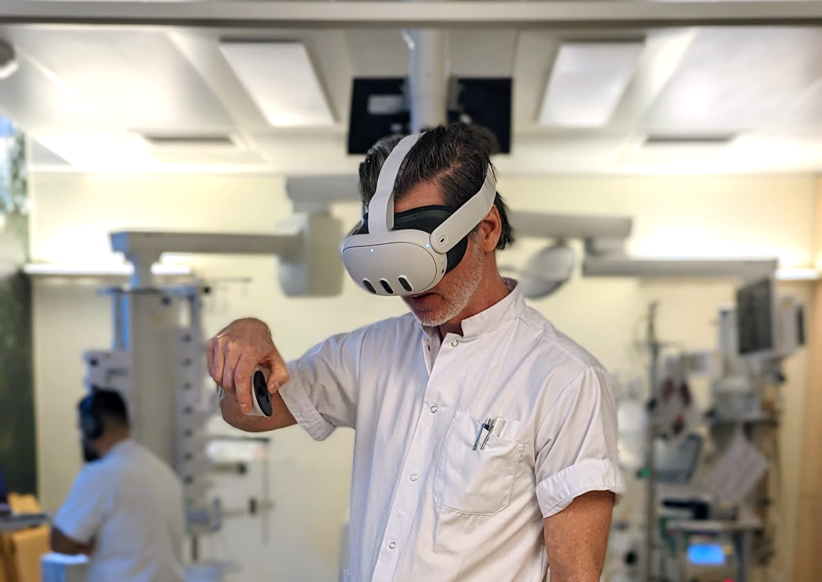
On May 19th, we were delighted to welcome Sam Max, Laurent Coopmans, Morsal Atazadah, and Bram Schalkwijk from the Department of Cardiothoracic Surgery at the Leiden University Medical Centre (LUMC) to introduce us to the ambitious projects of the Leiden AI XR Research Group (LAIXR). To tackle the critical capacity shortage of scrub nurses, as well as provide useful tools during surgery and reduce patients’ anxiety, LAIXR aims to create digital solutions, consequently increasing safe, accessible, and immersive training experiences.
ABOUT OUR SPEAKERS
Sam Max is the co-founder of LAIXR, as well as a medical doctor and PhD candidate in cardiothoracic surgery at the LUMC.
Laurent Coopmans is a technical physician in cardiothoracic surgery at the LUMC.
Morsal Atazadah is a medical doctor and PhD candidate in cardiothoracic surgery at the LUMC.
Bram Schalkwijk is a technical physician in cardiothoracic surgery at the LUMC.
VR Training Simulators
LAIXR has developed several VR-based training facilities, three of which are explained below.
VR ECMO
An ECMO is a complex machine that supports the function of a patient’s heart and lungs for a period of time to allow the heart and lungs to rest and heal. Since errors can be critical, it requires very proficient operators. To provide high-quality training, a team of experts at LAIXR has developed a VR simulation in partnership with the world leading experts of NYU Langone Health, including Brian Kaufman. The simulation contains a 3D digital twin of the ECMO together with an AI model which was trained on real patient data and therefore predicts accurately how patients’ vitals change for different machine settings. Research has shown that the VR ECMO training was not only well-received among its users but, crucially, also significantly reduced their error rate.
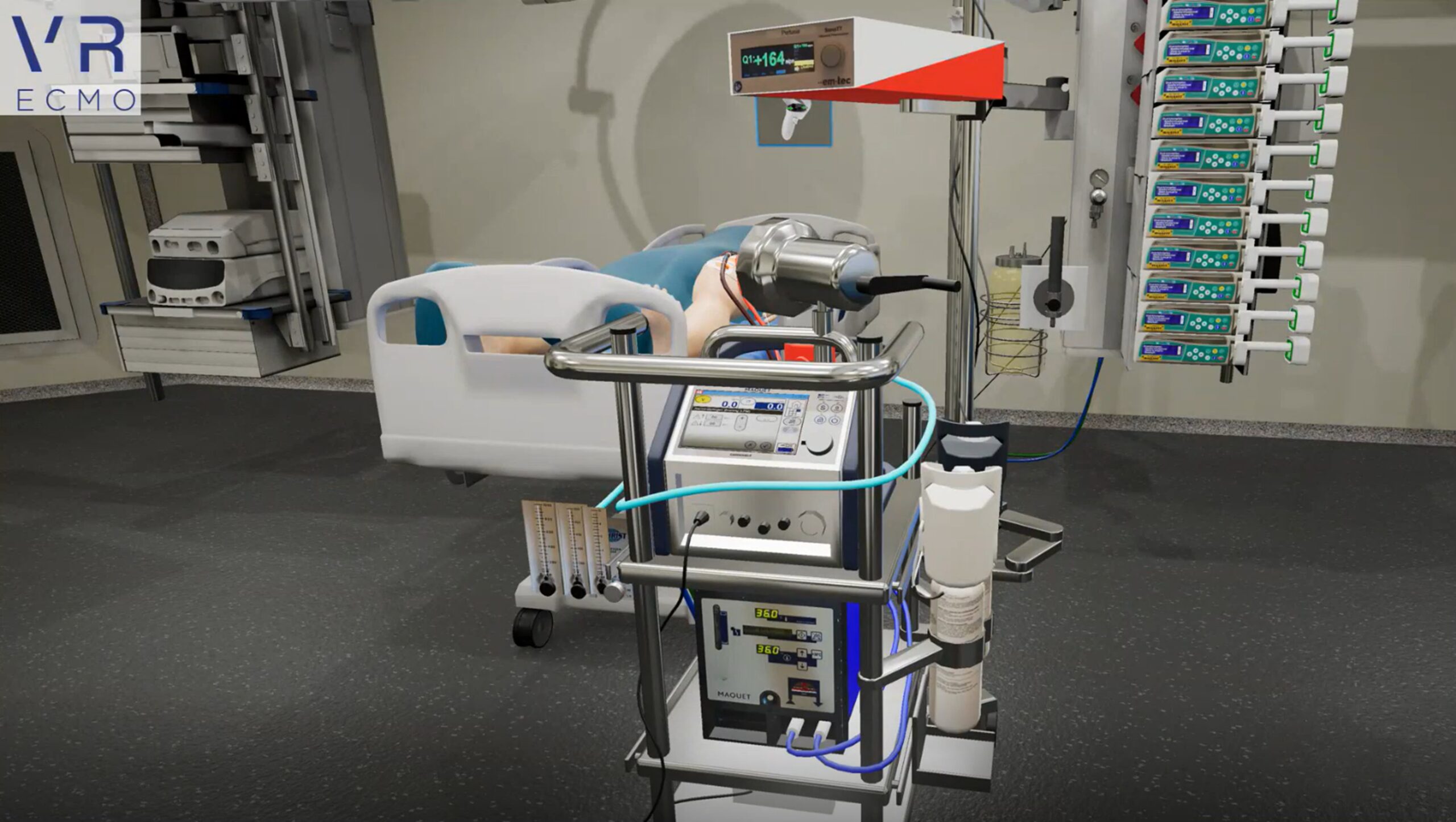
All image credits go to LAIXR.
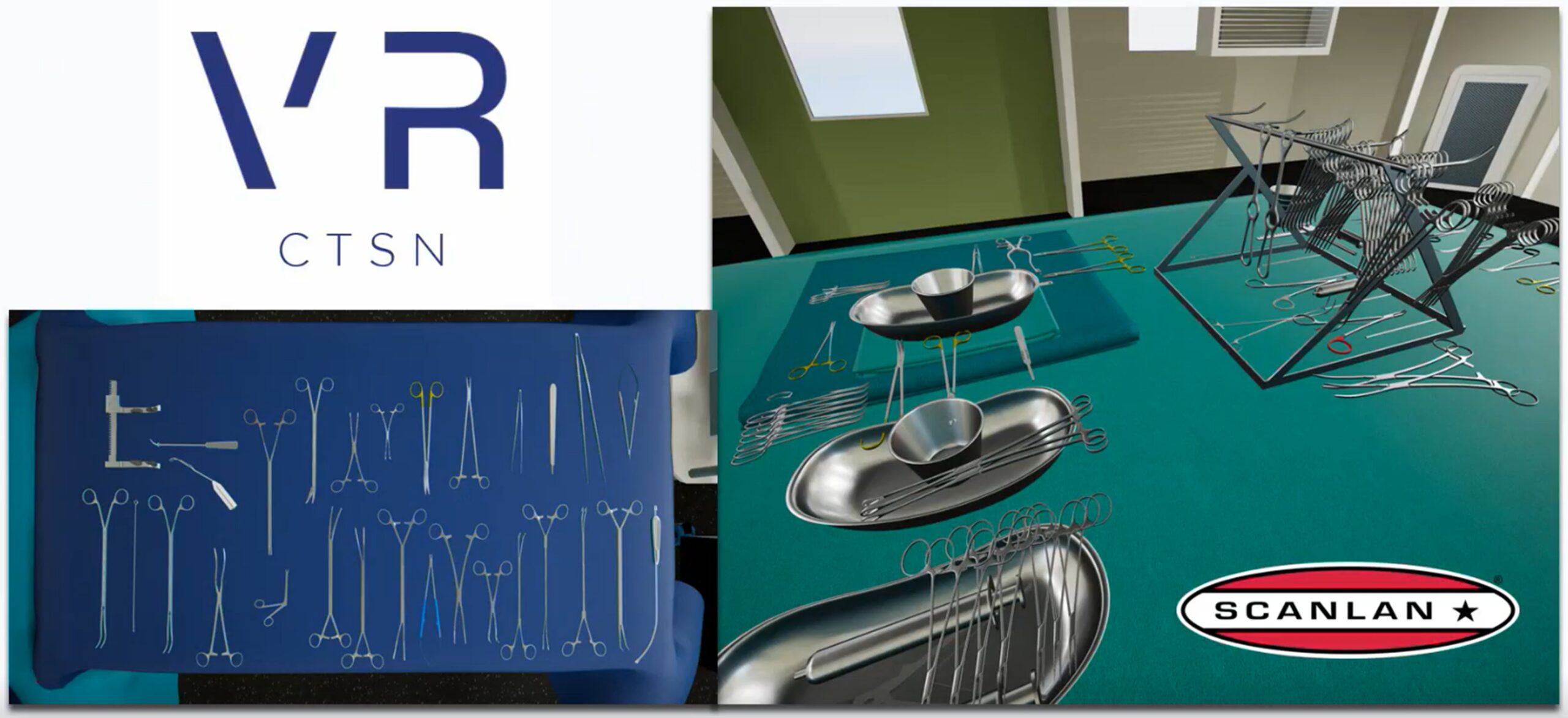
VR CTSN
Created in collaboration with the Dutch National Association of Scrub Nurses, the VR CTSN is a simulation through which scrub nurses can practice cardiac surgery procedures outside of the OR in considerably less high-stake environments without threat to life. As a result, training capacity is increased and experienced nurses can spend more time on procedures and less on supervision. Users can interact with digital twins of relevant tools. These were generated using a 3D scanning approach and include labels to learn their names.
VR Robotic Surgery
During robotic surgery, a camera with two small lenses, known as an endoscope, films a surgical field to create stereoscopic images. As a result, the surgeon has a 3D view of the operative site through a robotic surgical console. Currently, the most cost-effective method for students to view what the surgeon sees in the surgical console is limited to a 2D video format. To create a more realistic training option, the LAIXR team has developed a real-life surgical 3D video which can be accessed in a VR environment. The environment contains the stereoscopic close-ups, as well as a broader view of the patient and 360° video footage of the entire ER. At times, anatomical images are also presented to provide more information for the students. Since the preliminary results are very positive, the team together with the manufacturer of the surgical robot are expanding the project across Europe, filming several surgical procedures from different hospitals.
XR Surgery Guide
In addition to XR’s potential in scrub nurses’ training, Sam explained how it can also guide surgeons during operations. While textbooks include images with colours differentiating anatomical structures, a real-life body’s colour palette is much more monochrome, making it difficult to determine which parts are safe to cut and which are not. After making CT scans, the LAIXR team was able to model a 3D segmentation of a patient’s specific anatomy and colour it similar to the textbook examples. During robot surgery, this can be projected on top of the stereoscopic images, creating a clear visual guide for where exactly it is safe to cut.
Post-Operation Stress Relief
Lastly, Laurent demonstrated how VR can be leveraged to reduce anxiety in patients, consequently lowering acute postoperative surgical pain. The team at LAIXR has created a personalised application in which patients can choose their own desired immersive environment, such as a calming mountain view or an energising music concert. Since this is an entirely in-house project, the developers can customise these experiences directly to the patients’ liking. In case of a longer medical journey, they can even take home a VR set including goggles and headphones. Additionally, the team has created a VR medical journey to inform patients about every step and person they will encounter, reducing stress surrounding their stay in the hospital.
Currently focusing on lung cancer patients, LAIXR is researching how these experiences impact relaxation, ultimately aiming to reduce pain medication use and shorten hospital stays.
We would like to sincerely thank Sam, Laurent, Morsal, and Bram for their inspirational and ambitious presentation! If you would like to learn more about how LAIXR is leveraging XR in cardiothoracic surgery, please don’t hesitate to contact us via xrcommunity@llinc.leidenuniv.nl to access the recording of the full presentation.