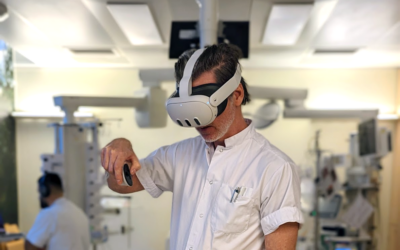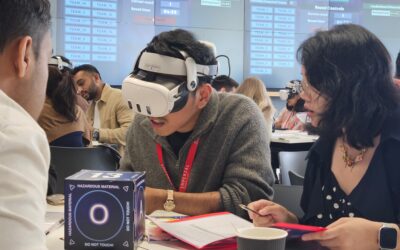
For our 32nd Meetup, we were thrilled to be joined by Louise Paepe from RTC Antwerp to share with us the process and successes of the Flemish XR Action Plan. Working with several hundred Flemish educational institutions allowed those involved in the large-scale plan to identify and act upon key obstacles when it comes to educational institutions’ adoption of XR technologies. Overall, the project has been highly successful, yielding in detailed insights, bolstering the adoption of XR for education across the region, and sparking the curiosity of those in other countries keen to achieve similar results.
ABOUT OUR SPEAKER
Louise Paepe is an XR coordinator at the Regional Technological Centre (RTC) in Antwerp, Belgium, in which position she has been heavily involved with the XR Action Plan. The RTC Antwerp is focused on closing the gap between education and the labour market and does so by bringing teachers and students up to speed with the latest tech and innovations, both in theory and practice.
TEACHING OBSTACLES
The origins of the XR Action Plan stem from some very real and frequently-cited issues faced by teachers in vocational and technical education, in particular, significant shortages of teachers and the expensive cost of the necessary equipment. Moreover, spaces required for the technology’s use could not always be reliably accessed and certain procedures were unable taught in a classroom owing, for example, to a lack of machinery/equipment or for ethical reasons.
XR ACTION PLAN
To find a solution, the Flemish government drew up the XR Action Plan in 2022 and, after 3 years, Louise is now able to share a selection of its outcomes including what have been identified as five fundamental ‘keys’ to successfully implementing XR in education: hardware, software, device and content management, training, and research.
Now, largely as a result of the Action Plan, the RTC has a structure in place to address each of these keys. Institutions can access hardware through the XR lending service available to 690 schools throughout Flanders. They can also access an XR software library containing over 500 modules on a wide variety of subjects collected from more than 30 educational partners. This library is actively curated by the RTCs, thus removing this burden from individual institutions. Moreover, institutions do not need to manage the devices or content themselves since this is coordinated remotely by the RTCs through a Mobile Device Management (MDM) system. In order to ensure the active use of the available devices and modules, teachers receive practical training in XR within an educational context through the XR academy. Lastly, various universities and colleges in the region have begun to conduct research on XR’s role in education as well as sustainable practices related to the technology.
Overall, the project has produced some rather insightful results. Amongst these, it has proven the effectiveness of a top-down approach as well as that both individual schools and teachers benefit from a structured approach which provides materials and, significantly, teaches how to use them. As a case and point, many teachers involved in the project have reported now to feel increasingly confident in using XR, and their educational institutions are investing in and further implementing the technology.
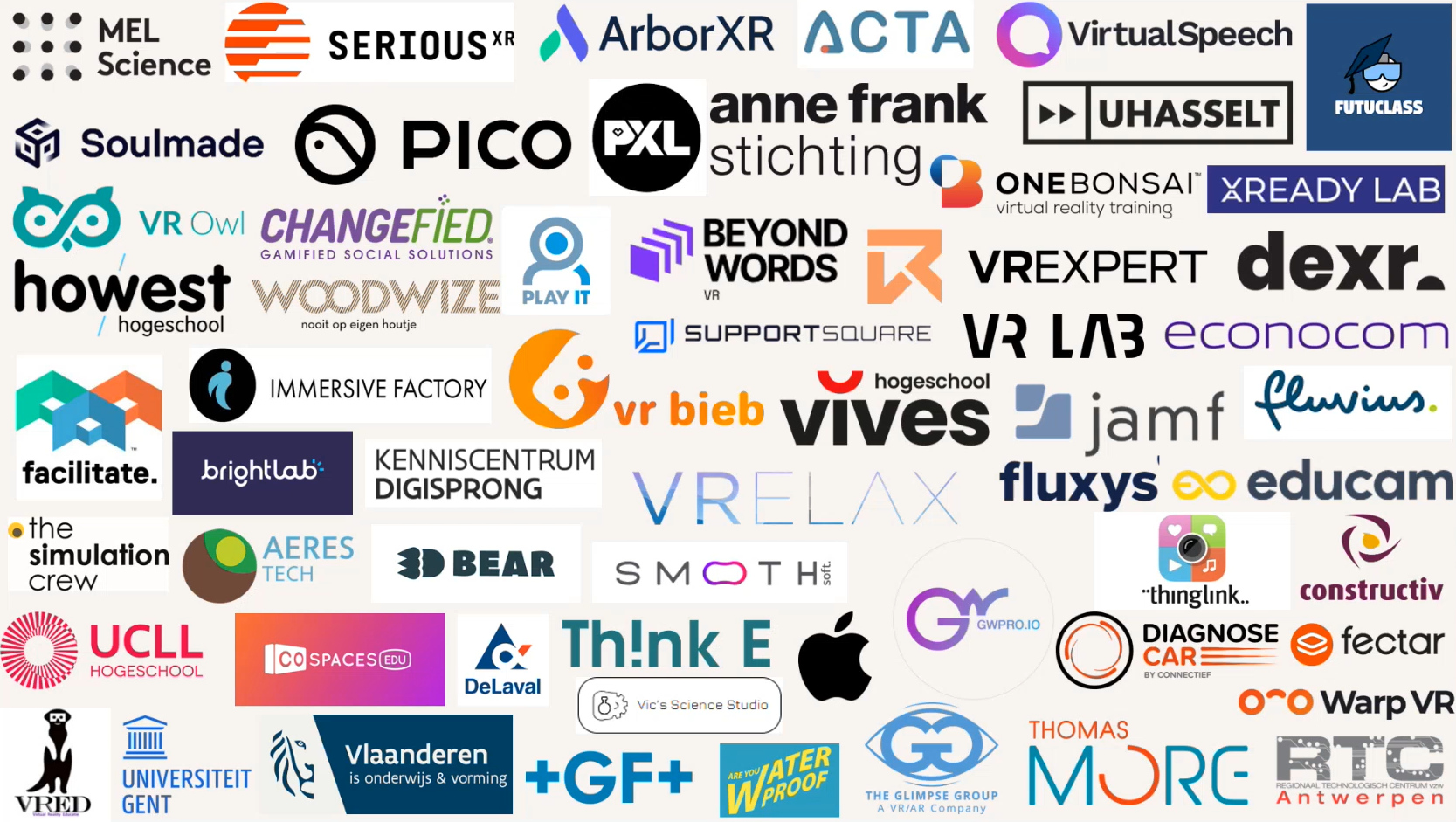
Partners supplying the XR software modules
Thank you very much to Louise Paepe for sharing the story of this quite remarkable project with us – we hope to see the implementation of similar projects elsewhere in the future! Those interested in the initiatives discussed, such as the XR lending service or XR academy, are welcome to visit the RTC Antwerp website to learn more.