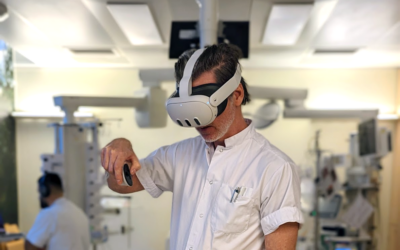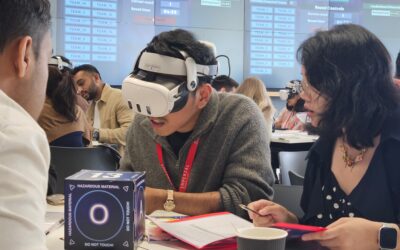
On July 1st, we were joined by Nina Krupljanin, a PhD candidate at Leiden University’s Institute of Education and Child Studies who has been researching the use of Virtual Reality as a means of conducting trauma therapy for children. In her presentation, she guided us through the current state of the research on this topic, as well as showcasing SHINE-VR, an application created as part of her research.
VR AS A TOOL TO PROCESS TRAUMA
While the use of VR in the processing of trauma has without doubt received attention from researchers in the past, much of this research has been heavily geared towards applications created for adults. There are, however, also many noteworthy applications which have been created for young people, a selection of which have been assessed by Nina by means of a scoping review to determine their feasibility for clinical practice. Her findings are below:
*Please note that the article following from this research is still under review, and thus the following findings, as presented by Nina during the Meetup, remain preliminary.
A total of 51 applications were included in the scope of Nina’s assessment, the majority of which were published after 2018. Of these, ten aimed at supporting assessment, usually of ADHD or related conditions. The remainder of the studies focused primarily on intervention and application, with the four main areas of focus being as follows:
- Psychoeducation
- Skills training
- Exposure
- Relaxation and hypnosis
To address each of these four focuses, children and adolescents were placed in VR environments designed to help them deal with specific issues, or gain valuable skills. Psychoeducation, relaxation, and hypnosis were used to ease preoperative anxiety. Skills training involved the learning of social and emotional skills as well as attention training. Exposure through VR has been used to help children manage feelings of (performance) anxiety and phobic symptoms.

The five factors involved in making a VR application feasible for clinical practice. Visual by Nina Krupljanin.
As Nina concludes, the research undertaken so far shows that, although VR has the ability to assist in improving mental health services for children and adolescents, some issues remain when looking at these already existing research. Firstly, the studies covered in the review were not replicated. Replications would strengthen the findings and help convince healthcare professionals of the usefulness of these methods. Secondly, the current method of measuring the feasibility of a certain application for clinical use is not entirely up to par – a more transparent method would be an improvement here.
SHINE-VR: HELPING ADOLESCENTS OVERCOME SHAME
In the second section of her presentation, Nina shared the application she developed together with Maarten Struijk Wilbrink as part of her PhD research. SHINE-VR, which is short for shame intervention – virtual reality, is a tool created to address feelings of shame in adolescents with sexual trauma. As Nina explains, these feelings of shame are often deep-rooted and can have a significant impact on someone’s ability to live their life as they would like to.
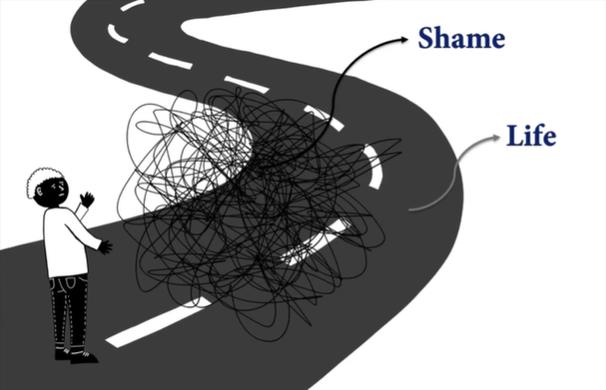
Feelings of shame can obstruct one’s path in life. Visual by Nina Krupljanin.
All adolescents who participated in the study were already in traditional therapy for sexual abuse. This is essential to note since SHINE-VR is a complementary tool which has no ambitions to replace a physical, conventional therapist.
In order to make the participants more comfortable in the VR environment and ensure they knew how it worked, they were first given the opportunity to create a VR avatar of themselves, after which they completed a simple interactive task.
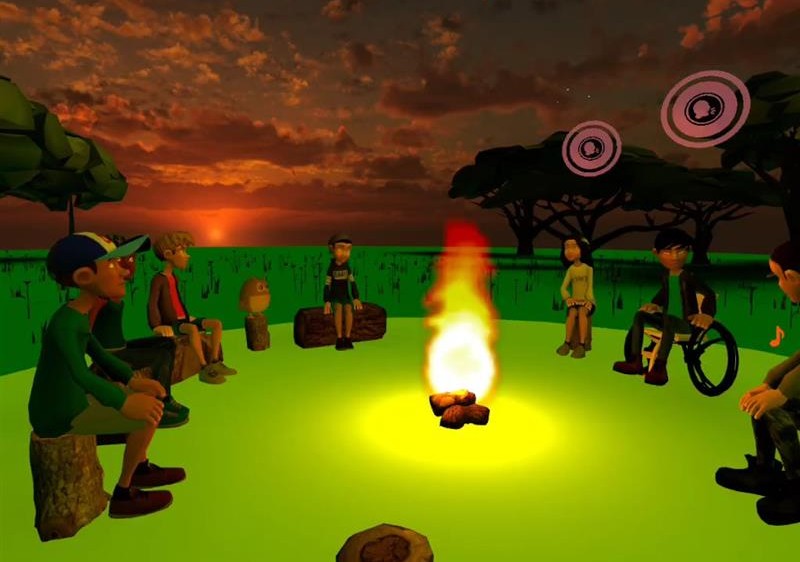
The main part of the application revolves around three modules, each dealing with different topics. Each involved an element of self-paced psychoeducation, followed by a more practical task. The first module deals with stigma surrounding trauma treatment. The adolescents find themselves around a campfire with other adolescent avatars. Upon engaging with the avatars, they can hear true stories shared by other adolescents, and they themselves are also invited to share their own experiences if they wish to do so. Module two has a similar structure, but instead the focus is on trauma-related shame. The last module teaches the skill of self-compassion by having the participant interact with their own avatar and practice compassionate reactions, after which a literal perspective change takes place, and they can hear back their own compassionate response – which thereby becomes self-compassion.
Combining these three sections of the application, adolescents are provided with a safe space where they can listen to the stories of peers who have gone through similar experiences, share their own narrative, and practice methods to deal with trauma-related shame, all within the virtual immersive environment.
As the study is still in its final stages, the results are preliminary (but positive!). We recommend that those interested keep an eye on our socials, as we will share the article detailing the full results of the study there.